featured slide

Bloggerized by Nauman Khan

featured slide

Bloggerized by Nauman Khan

featured slide

Bloggerized by Nauman Khan

featured slide

Bloggerized by Nauman Khan

featured slide

Bloggerized by Nauman Khan

Showing posts with label KICKSTARTER. Show all posts

Tuesday, October 16, 2012

The Hidden Radio


hidden-open
Many of my Kickstarter dreams have come tumbling down in disappointing or non-shipping products, which isn’t a knock against the site; that’s a risk I fully accept and take with every project. But without a doubt, the Hidden Radio Bluetooth speaker was one I was really looking forward to. Now, I’ve spent some time with it, and I find myself with mixed feelings about this portable audio accessory.

Short Version

Since the Hidden Radio first debuted on Kickstarter way back in November, a lot has changed in the world of portable device speakers. Things have gotten better; a lot better, in fact, with stuff like Jawbone’s Big Jambox coming along and basically making everyone fall in love with it. For the Hidden Radio, long overdue according to its original manufacturing timeline, and with specs that in some areas actually fall short of those originally promised, time has not been good for this little upstart. But it is a capable, and for now, cheaper alternative to some of the market leaders.
Features:
  • Portable.
  • 15-hour battery life.
  • Works with both wired and wireless connections.
Pros:
  • Omni-directional speaker ensures 360-degree sound coverage.
  • Good-looking piece of kit.
Cons:
  • Sound quality is not segment-leading.
  • Volume control gimmick is cute, but turning it down also muffles audio in a way that software volume reduction doesn’t.

Long Version

Design
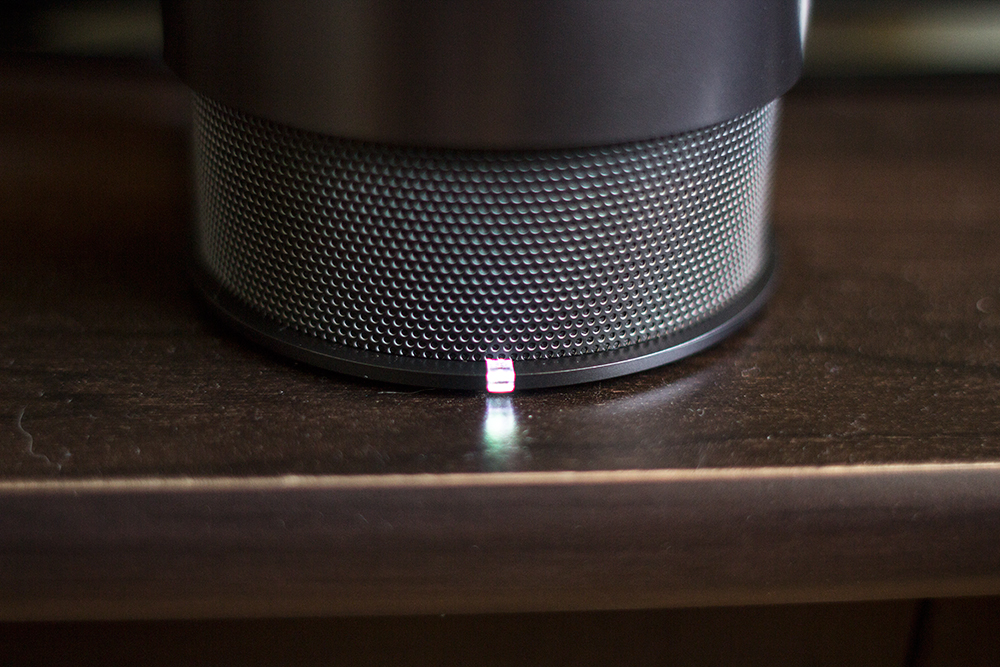
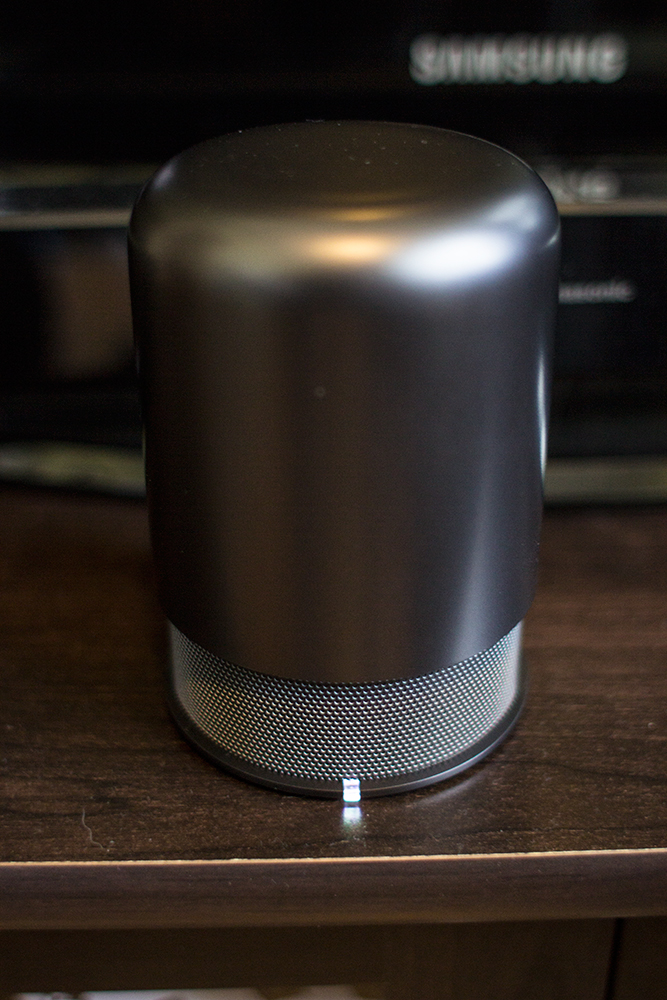
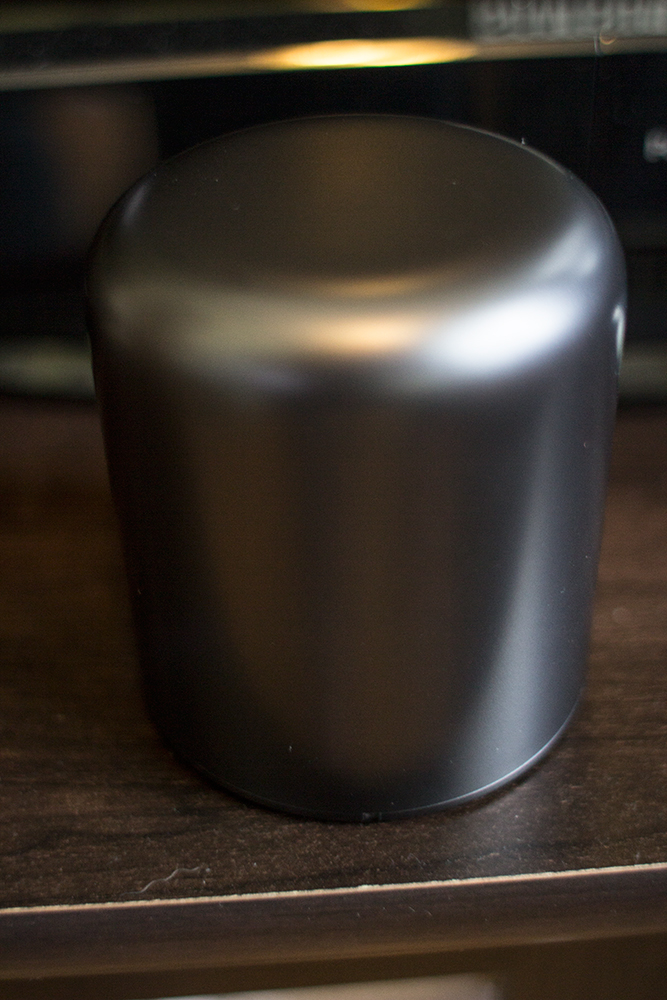
Let’s start with the Hidden Radio’s strengths: it’s a very good-looking device, one that can live happily among a variety of decors, and one that feels particularly at home with Apple hardware. I’ve got the matte black version, and in both closed and open mode, it’s beautiful (check out the gallery below). Plus the design is sensible: when the cap is twisted shut, power is locked off and the speaker grille itself is protected from the elements. The columnar shape is also fairly compact and portable, though it might be less portable (and is definitely less rugged) than say, a Phillips ShoqBox.
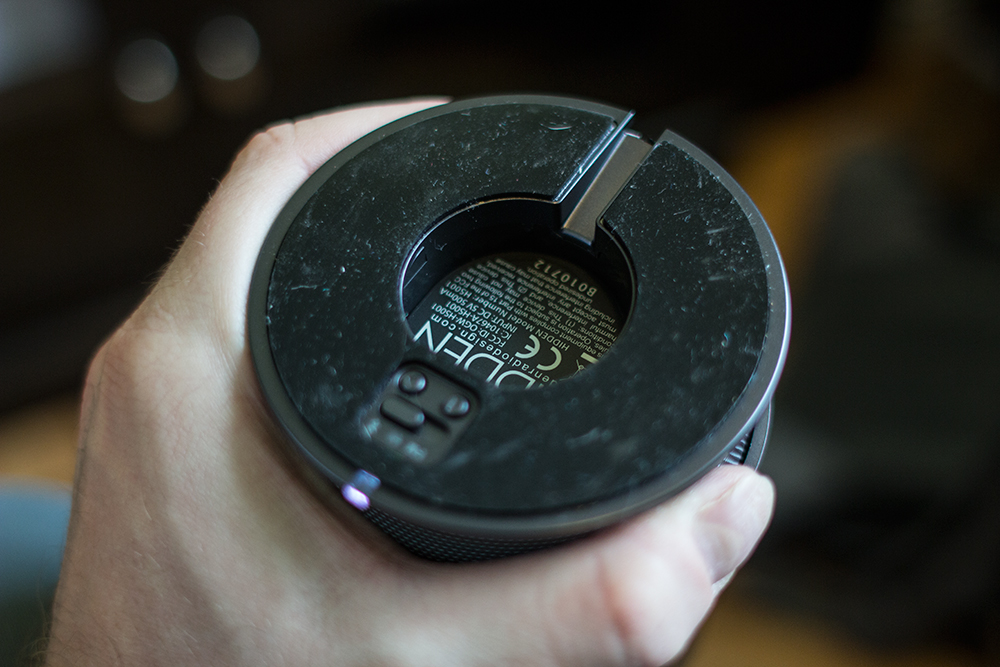
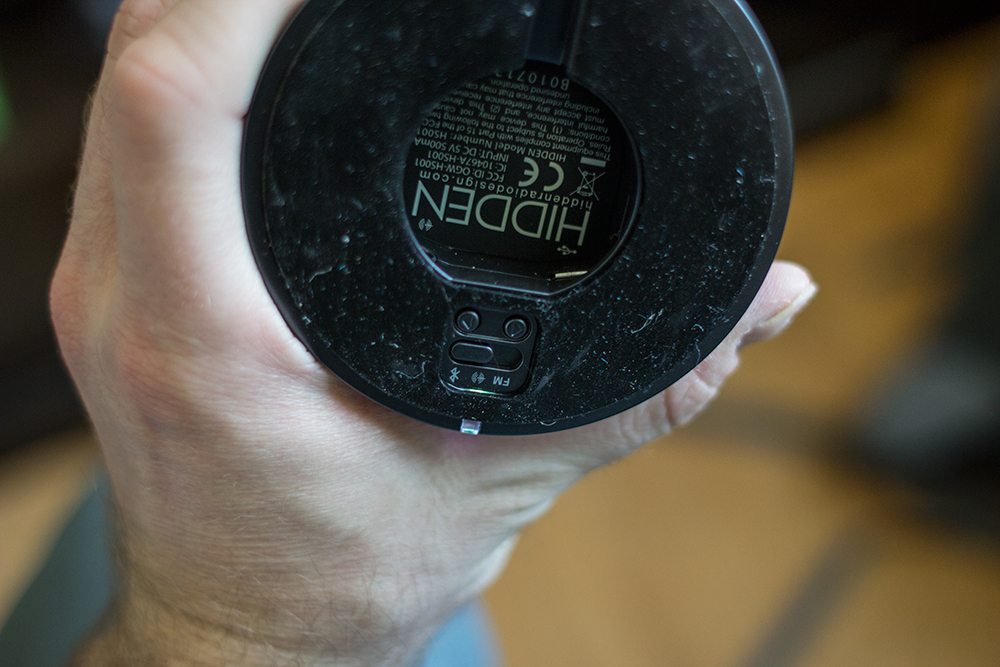
The other notable part of the design is the grippy pad on the bottom, which is designed to hold the Hidden Radio in place as you twist the cover open and shut to control power and volume. That part performs its task well, though as you can see in the gallery photos below, the grippy portion picks up dirt and dust very easily and will require frequent cleaning to maintain its stickiness.
The bottom does have one major failing though: in what looks like  an effort to keep things ‘hidden,” the ports for both microUSB (charging) and 3.5mm stereo input are housed in a recessed circular crevice in the bottom of the device. It’s nice for keeping things out of the way in theory, but in practice it’s very difficult to get the microUSB cable in and out, and I’m not sure the aesthetic benefits outweigh the drawbacks.
Features
The Hidden Radio originally promised 30 hours of battery life for streaming music. It ships with 15, which is good, but obviously not as good. That 15 hours still puts it on par with the Big Jambox, and better by five hours than the more size-comparable original Jambox. Hidden also promised Bluetooth speakerphone functionality, which both the Jambox and Big Jambox offer, but that didn’t make it to the final product. An FM radio is included, but not the promised AM/FM capabilities. It’s understandable that reality would cause some changes, but when a project raises $938,771, far above its original $125,000 goal, it becomes more of an issue.
Still, the Hidden Radio does pair easily with devices, and the twist-on, twist-off feature is very convenient. Also 15 hours is a lot of juice, and plenty for most users, and the FM radio is a nice touch. The original Kickstarter may have over-promised, but that shouldn’t really reflect much on the product taken as a standalone device. Still, if a pre-release notice from an established listed a number of features that didn’t make the shipping unit, they’d definitely be called on it.
Sound
This is the big area for all Bluetooth speakers, and I have to say that I’m less impressed with the Hidden Radio in this regard than I was expecting to be. Audio quality was originally one of its selling points, but it lags behind the leaders in this space. The sound is fine, and the 360-degree nature of the speaker means that it’s good for background music at small gatherings, but audiophiles will be disappointed. And sound quality deteriorates quickly if you use the hardware volume control by twisting the cap down, making stuff sound like it’s underwater – this speaker performs best if kept at full volume, with changes to auditory level controlled from the phone. Sound did seem to improve over time, however, as the speaker got broken in.
Conclusion
At $149, the Hidden Radio is a good little speaker that trades significantly longer battery life for slightly worse audio quality when compared to the Jawbone Jambox, but I’d be less eager to recommend this product at its regular stated selling price of $190 (in black and silver; $180 in white), which it climbs up to after November 15. But in a crowded market, selling features like resistance to the elements and new, more powerful designs have emerged to make standing out largely on the basis of a volume control gimmick a little more difficult, once you’re at or near price parity.
Saturday, May 12, 2012

Zombie Apocalypse, the Board Game


Game Night of the Living Dead
The project started as a creative outlet. Gracia’s college band broke up and a weekly game night filled in. But being a restless maker, he soon grew tired of playing other people’s games and decided to create one himself. Starting with a rough idea and “zombie apocalypse” as the theme, he began experimenting.
His first prototypes were crude black-and-white printouts and gameplay was a disaster, “Everyone died in a few minutes” admitted Gracia.
Unfazed, he redesigned the rules. The next session had a smaller body count. He partnered with a web designer named Zack Parks, whom he met on a message board, and the game improved steadily. With a little prodding from friends, the pair set out to bring the game to market and christened their company GreenBrier games.
Gracia and  Parks had a rule set and general design, but games live or die on artwork. In order to be successful they needed to find a hungry designer in search of an opportunity. They turned to Deviant Art, the web’s largest and most active community for illustrators. They advertised for an unpaid illustrator with a predilection for zombies and received over 50 applicants.
The pair held a “design-off”, with the only prize being more unpaid work, goth glory, and a share of future revenues. Illustrator Ricky Casdorph won the challenge, joined the team, and started spawning blood-spattered characters at a furious pace.
Custom design software allowed the team to rapidly develop content. Photo: GreenBrier Games

Zombie Photoshop

As the team grew, so did the stakes. Gracia and Parks leveraged their expertise as software engineers to create a custom design program (think Zombie Photoshop) that allowed the geographically distributed team to iterate rapidly. If a prototype did poorly in a test, they could easily redesign. These new tools allowed the game design to evolve more quickly and it soon developed the patina of a commercial product.
GreenBrier Games invested in rapid prototyping tools to produce high quality samples.
The team decided to test the game at few popular conventions, but knew that printouts would look lame, so they and invested in steel-ruled dies — tools that look like cookie cutters — that cut through chipboard, to prototype the game pieces. Using those tools, they produced polished samples that looked like manufactured products.
Convention attendees played for hours. Many asked how much it would cost to take the prototypes home, a testament to the quality of the team’s production values.
Play testing Zpocalypse at a game convention
With enthusiastic responses from gamers, Gracia started contacting factories that could mass-produce Zpocalypse. But goaded by the founders’ wide-eyed excitement, the game design had ballooned to include hundreds of cards, dozens of tiles, and scores of miniature figures, all resulting in an impossibly high quote from manufacturers. “You’re crazy to have this much content” was the blunt message relayed by a game-industry adviser.
The Zpocalypse team quickly reduced the scope of the game by 80 percent, making their manufacturing estimates much more manageable.

Dawn of the Designer

Aspiring game designers used to have to wait to take their game to the annual Toy Fair in New York City and pray that Mattel or Hasbro would decide to distribute it. Today, Kickstarter is the kingmaker.
Green Brier Games set out to raise $15,000, but the excellent design, loyal community who had already played the game in development, and a tweet from nerd queen Felicia Day, rocketed Zpocalypse into the record books. The game is now scheduled for release this Halloween.
Kickstarter has a graveyard of games that didn’t succeed. What set Zpocalypse apart? Design wasn’t the only factor, but it was a critical one. If you’re thinking of bringing a product to market, don’t be a brainless zombie; add a designer to your team if you hope to survive.
All photos courtesy of GreenBrier Games

Wednesday, May 9, 2012

A New, More Useful Way to Stuff Your Bra


POSTED BY ANJELIKA PARANJPE

It's a bird, it's a plane, it's… a SUPER BRA! Actually, it's a JoeyBra, but it just might make you feel like Super Woman. 
How often have you tried to stuff your ID, keys, cash, and phone in your bra? When you go to a cocktail party, are you the awkward gal who's holding her phone along with her drink? We've shown you the Click Bag, the Pocket Scarf, and the Iron-On Pocket, each of which does the job for certain situations, but what about the dance floor? Sometimes that mini purse just doesn't allow for the moves you're dying to bust out. 
Enter the JoeyBra, the first sexy and comfortable pocketed bra.
Created by two students at the University of Washington (and currently looking for pledges over on Kickstarter), the JoeyBra has been designed "specifically with the party girl in mind". After doing a survey of over 200 women, they found that 95% had a problem finding a place to put their belongings while out, and 73% had lost personal items from a lack of pocket. We've all been there, scratching our heads saying "I thought I put it in so-and-so's purse or jacket…" 
It works with pretty much any outfit, and can be worn as a regular bra, strapless, or crisscrossed in the back. 
And this bra is good for the guys as well. If you're a dude who's ever been to a wedding, dance party, or happy hour with a girlfriend, girl friend, wife, or sister, you've probably carried her phone, wallet and keys in your pocket. Whenever she wants to take a picture, you need to be available. When she needs a drink, she ends up asking you to get it because you've got her cash anyway (and, of course, because this is also the chivalrous thing to do). But, don't you want the ladies in your life to feel liberated?
Plus, it looks good. It's not some half vest half bra hybrid that makes you feel like you're on a safari. It's lacy, leopard-tastic, and even has a little extra oomph by way of a lightly padded push-up. So far, it's being offered in Small (32A, 32B, 34A), Medium (32C, 34B), and Large (32D, 34C, 36B) but they're planning to offer even more sizes once their Kickstarterfunding comes through. With 12 days to go on Kickstarter, the JoeyBra is already at double their goal. If you pledge $30 or more, you get your very own JoeyBra sometime this summer. Or, go directly to the JoeyBra website and pre-order one for $20. All in all, a ridiculously good deal!